
The Pool People of Ohio
VINYL POOL LINER REPLACEMENT
Don’t miss a minute of relaxation and fun in your pool … get your vinyl liner replaced to prevent extended closure during the pool season!
If your liner is close to 10 years old, or is showing any signs of wear – such as stretching, brittleness, cracks, tears, faded color or stains – it’s time to replace it. With more than 40 years of local experience, a five-year FULL manufacturer warranty and a 20-year pro-rated warranty, you can rest assured that you’ll enjoy many more years trouble-free in your vinyl liner swimming pool.
We have a wide variety of liner patterns and color palettes to ensure your pool mirrors the vision you have for your backyard oasis! We highly recommend stopping in to see the liners in-person before making your selection.
Be sure your pool is ready when your swimmers are! Submit the form to schedule your liner replacement.
If your liner is close to 10 years old, or is showing any signs of wear – such as stretching, brittleness, cracks, tears, faded color or stains – it’s time to replace it. With more than 40 years of local experience, a five-year FULL manufacturer warranty and a 20-year pro-rated warranty, you can rest assured that you’ll enjoy many more years trouble-free in your vinyl liner swimming pool.
We have a wide variety of liner patterns and color palettes to ensure your pool mirrors the vision you have for your backyard oasis! We highly recommend stopping in to see the liners in-person before making your selection.
Be sure your pool is ready when your swimmers are! Submit the form to schedule your liner replacement.
When replacing your liner, it’s a great time to think about adding LED lights, updating your railing and replacing your winter safety cover (ask about additional savings when doing both!).
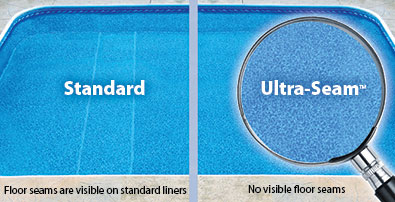
EXCLUSIVE ULTRA-SEAM™
With standard vinyl pool liners, the seams on the pool floor are visible. Latham's exclusive Ultra-Seam™ process makes floor seams stronger and virtually invisible. No more visible lines on the floor detracting from the beauty of the pool!
VINYL LINER PATTTERNS
With standard vinyl pool liners, the seams on the pool floor are visible. Latham's exclusive Ultra-Seam™ process makes floor seams stronger and virtually invisible. No more visible lines on the floor detracting from the beauty of the pool!
VINYL LINER PATTTERNS

POOL VINYL LINER PATTERN
BALI / BLUE GRANITE

POOL VINYL LINER PATTERN
BLUE BONAIR

POOL VINYL LINER PATTERN
BLUE SLATE PEARL

POOL VINYL LINER PATTERN
BUTTERFLY EFFECT PEARL

POOL VINYL LINER PATTERN
CARNEGIE / COBALT FUSION

POOL VINYL LINER PATTERN
CAYMAN / MYSTIC LIGHT BLUE

POOL VINYL LINER PATTERN
COROLLA / STARDUST BLUE

POOL VINYL LINER PATTERN
COURTSTONE BLUE / STARDUST BLUE

POOL VINYL LINER PATTERN
COURTSTONE GREY / STARDUST GREY

POOL VINYL LINER PATTERN
COVENTRY / COBALT FUSION

POOL VINYL LINER PATTERN
DISCO PEARL

POOL VINYL LINER PATTERN
DIDURANGO / GREY MOSAIC

POOL VINYL LINER PATTERN
ECLIPSE AMBER

POOL VINYL LINER PATTERN
ESAGONO

POOL VINYL LINER PATTERN
FALLING ESAGONO / GREY CRYSTAL

POOL VINYL LINER PATTERN
GREY BONAIR

POOL VINYL LINER PATTERN
GULF COAST / TAN SEASTONE

POOL VINYL LINER PATTERN
HAMPTON / SEAGLASS

POOL VINYL LINER PATTERN
INDIGO MARBLE / BLUE GRANITE

POOL VINYL LINER PATTERN
ISLAND WAVE / TERRAZZO CARIBBEAN

POOL VINYL LINER PATTERN
LEGENDS / COBALT FUSION

POOL VINYL LINER PATTERN
MOUNTAIN TOP / BLUE MOSAIC

POOL VINYL LINER PATTERN
NANTUCKET / BLUE SEASTONE

POOL VINYL LINER PATTERN
PANAMA / ROYAL PRISM

POOL VINYL LINER PATTERN
PEARLSTONE

POOL VINYL LINER PATTERN
REEF

POOL VINYL LINER PATTERN
ROYAL AMBER

POOL VINYL LINER PATTERN
ROYALE / BLUE MOSAIC

POOL VINYL LINER PATTERN
SUMMERWAVE / COBALT FUSION

POOL VINYL LINER PATTERN
TERRAZZO / ELECTRIC AQUARIUS

POOL VINYL LINER PATTERN
TULUM / MAYAN MOSAIC

POOL VINYL LINER PATTERN
VINTAGE MOSAIC / BLUE MOSAIC

POOL VINYL LINER PATTERN
WHITEHAVEN / CRYSTAL QUARTZ
Pool Liner Request Form
FEATURED RESOURCES
FIBERGLASS POOLS VS. VINYL POOLS
WHEN IS IT A GOOD TIME TO CHANGE A VINYL SWIMMING POOL LINER?
DANGERS OF HIGH CHLORINE LEVELS IN A VINYL LINER SWIMMING POOL